


Police Car Chase: Police Games
3.816.00 Reviews
App Specs
- Version
- 8.9
- Updated On
- License
- Free
- Downloads
- 5,000,000+
- Developer
- Emerging Games Studio
- Categories
- Racing
- Platform
- Android
Screenshots
 Analysis by AppCompare
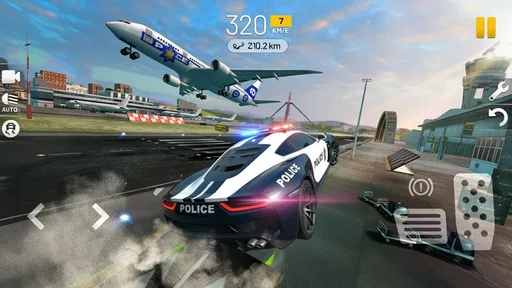
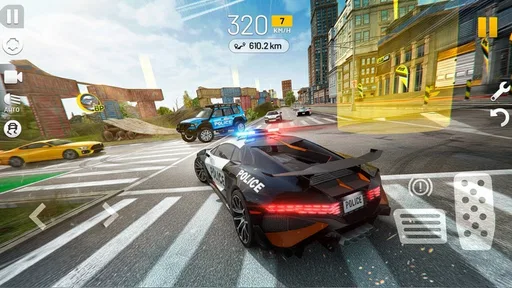
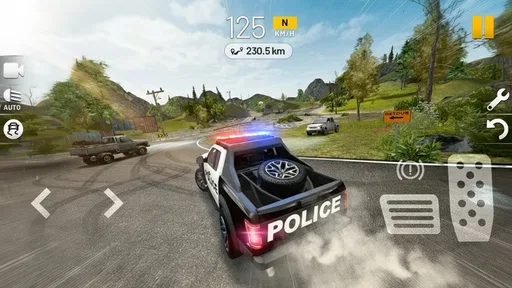
Police Car Chase: Police Games is a free racing game from Emerging Games Studio built around one clear idea: you drive a police car, pursue criminals, and try to finish each chase with a sense of control rather than simply following a track. I found that focus more important than the title suggests. This is not trying to be a broad driving simulator or a deep vehicle-collection game. Its appeal comes from turning a familiar police pursuit into the main activity and asking you to react quickly while keeping the car moving.
I approached it as a short-session mobile game, the kind of thing I could open when I had a few minutes rather than a replacement for a large console-style racer. That framing makes the experience easier to appreciate. The game is free to start, carries a Teen content rating, and supports devices running Android 7.0 or later. It has reached over five million installs, while its average rating sits at around 3.8, so the reception suggests a playable idea with some uneven edges rather than a universally polished racing package.
Chasing criminals is the game’s defining capability
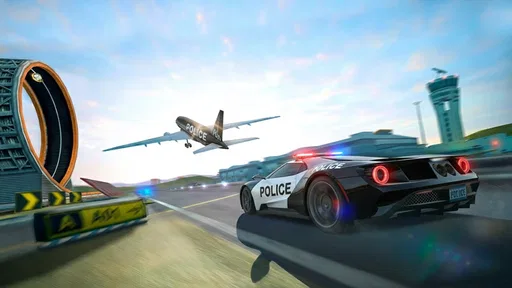
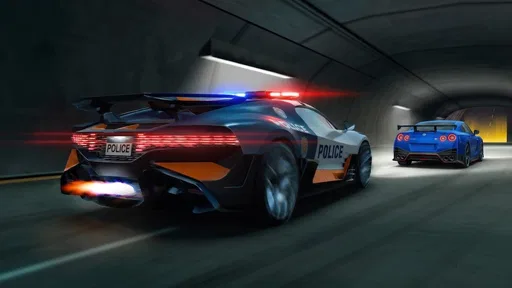
The most important feature here is the pursuit itself. In a normal racing game, the road, lap time, and position against other drivers usually determine success. In this game, the meaning of speed changes because your driving has a purpose: close the distance, stay on the route, and bring the target under control. That simple change gives ordinary movement more urgency.
I liked how this focus makes every turn feel more meaningful than it would in a basic endless driving game. A sharp change of direction is not merely something to survive for a better score; it is part of maintaining pressure during the chase. Even when the underlying driving is straightforward, the police role gives the session a small story arc. You begin with a target ahead, make decisions while moving, and finish with the satisfaction of completing the pursuit.
The strongest part of Police Car Chase: Police Games is its immediate police-pursuit loop. You do not need to learn a complicated racing career before the central idea becomes clear. The game communicates its purpose quickly, which is useful on a phone where players often want action without a long setup.
That clarity also explains the game’s limitations. Because the pursuit is the center of attention, anyone looking for a large selection of racing disciplines, detailed tuning, or a highly technical simulation may find the experience narrow. The game works best when you want the fantasy of being in pursuit, not when you want every part of police driving represented in depth.
Why the police role changes ordinary driving
Police-themed racing games can easily become ordinary car games with flashing lights added on top. Here, the pursuit concept has more value when I treat the road as a problem to solve. I am not simply trying to drive beautifully; I am trying to preserve momentum and avoid losing the opportunity to catch the fleeing vehicle. That creates a useful tension between speed and control.
Worth Reading Before You Choose

EA SPORTS FC Mobile 26 Is a Bigger Football Game, but It Takes Time

Flipboard Shows What News Apps Must Do Beyond the Feed

Switching to Android Auto Means Rethinking Your Driving Routine

Google Calendar Makes a Crowded Week Easier to Manage

Ludo King Makes the Most of the Minutes Between Plans

Baby Panda World Brings Quick Play to Modern Phones, but Its Game Library Feels Busy
For example, rushing into every turn can feel exciting at first, but it can also make the chase less manageable. A slightly more deliberate approach often works better: I focus on reading the next bend, keeping the car aligned, and avoiding unnecessary corrections. This is one of the less obvious lessons of the game. The fastest-looking move is not always the most effective one when the objective depends on staying close and maintaining a clean line.
The game is therefore more approachable than a serious racing simulator, but it is not entirely mindless. Even a simple chase benefits from attention. If I play while distracted, the police theme cannot rescue the session. The game’s central capability only becomes satisfying when I actively manage the distance and the road instead of treating the car as something that moves automatically toward a result.
How the pursuit feels during a normal session
In practice, the experience is easiest to understand as a sequence of compact driving challenges. I start by getting comfortable with the car’s movement, then concentrate on keeping the pursuit alive. The important habit is to look beyond the immediate moment. A player who reacts only after reaching a turn will often be forced into a correction, while someone who anticipates the road has more room to preserve speed.
I recommend using the first few sessions to learn how much steering input the game expects. Mobile controls can feel sensitive or loose depending on the device and the player’s habits. Instead of making large movements, I found it more useful to make small adjustments and return the car toward a stable line. That approach reduces the feeling of wrestling with the screen and makes the police chase feel more deliberate.
Another practical tip is to separate pursuit decisions from speed decisions. When the target is close, the temptation is to push aggressively at every opportunity. I had better results when I first secured a predictable path and then increased pressure only when the road allowed it. This is especially helpful for players who are new to mobile racing, because it turns a frantic chase into two manageable questions: where should the car go, and how hard should I push?
A useful routine for short play sessions
My preferred routine is simple. I begin with a session focused on control rather than winning, paying attention to how the car responds during turns. Once the movement feels familiar, I shift my attention to the target and try to avoid wasting momentum. If a chase goes badly, I treat the next attempt as a chance to change one habit instead of repeating the same approach with more speed.
This makes the game a better fit for brief breaks than for long, uninterrupted play. A quick session can still feel complete because the objective is easy to understand. I do not need to remember a complicated build, a long quest chain, or a large set of upgrades before returning. The trade-off is that players who need constant variety may feel that the same basic chase idea becomes familiar sooner than expected.
It is also worth considering the age rating. The Teen classification makes it less suitable as a blind choice for very young children, even though the concept is presented through a game rather than a realistic driving lesson. Parents choosing a racing title should check whether the police-chase theme matches the child’s age and expectations.
What the free model means for the player
The game is free to download, which lowers the barrier to trying it. That is helpful because the best way to judge this particular style of racing is to experience the handling personally. The title also includes in-app purchases ranging from under a dollar to about twenty dollars per item. I would keep that in mind before handing the phone to a child or allowing unrestricted purchases.
For me, the free entry point works best when I treat optional spending as something to evaluate carefully rather than an automatic part of progression. A player who enjoys the core chase can decide whether any purchase genuinely improves the experience. Someone who dislikes the driving feel will not solve that problem by spending more, so trying the basic game first is the sensible approach.
The best everyday scenario for this game
The strongest use case is a short waiting period: a bus ride, a break between appointments, or a few minutes at home when I want something active but do not want to commit to a long race. The pursuit format gives me a clear reason to play immediately. I can focus on one chase, put the phone away, and return later without needing the emotional investment demanded by a larger racing campaign.
Imagine having ten minutes before leaving for work. A traditional racing game with long events, extensive car selection, or complicated setup may feel like too much. Police Car Chase: Police Games is more suitable when the appeal is immediate movement and a direct objective. I can start with the police role already established and spend the available time improving my control of the chase.
This scenario also reveals an important trade-off. The game is convenient because it is direct, but that same directness may not satisfy someone planning a long evening of competitive racing. If I want deep customization, realistic vehicle behavior, online competition, or a broad career structure, I would choose a different racing game. This one earns its place through accessibility and theme, not through the scale of its systems.
Who should skip it
I would skip this game if my main reason for playing racing titles is technical realism. The police setting may sound dramatic, but the core appeal is the chase loop, not an exhaustive simulation of law-enforcement driving. Players who dislike repeated pursuit-focused sessions may also run out of reasons to continue sooner than players who enjoy refining their reactions.
I would also be cautious if I prefer games with a clearly documented competitive structure or a large amount of long-term progression. The available facts identify it as a racing game centered on police chases, and that is the safest way to approach it: as a focused mobile activity rather than a complete alternative to every other racing format.
Finally, players who are sensitive to in-app purchases should decide on a spending boundary before playing. The free price is attractive, but optional items can cost from $0.99 to $19.99 each. That does not automatically make the game poor value, yet it does mean the purchase model belongs in the decision, especially on a shared device.
Trade-offs in control, variety, and comparison
Compared with an ordinary arcade racer, the police pursuit gives this game a stronger immediate identity. A standard racer may ask me to beat a lap time or finish ahead of opponents; this game gives the drive a more specific purpose. That can make a short session feel more engaging, particularly when I want a themed challenge instead of anonymous track racing.
Compared with a serious driving simulator, however, the balance is different. Simulation-focused alternatives usually reward careful braking, vehicle knowledge, and precise racing technique across varied events. Police Car Chase: Police Games is easier to approach because I can understand the objective quickly, but it offers less reason to study a car in depth. The choice depends on whether I value instant pursuit action or detailed driving mastery.
Compared with an open-world police game, this title is also more focused. An open-world alternative may offer exploration, missions, and a larger sense of place, while this game concentrates attention on getting through the chase. That focus is a strength when I have limited time, but a weakness when I want to wander, discover locations, or create my own stories outside the main pursuit.
The rating of around 3.8 from roughly 2.3 thousand ratings reflects that middle position fairly well in my view. The game has a clear hook and a substantial audience, but the experience is not so broad or polished that every racing fan will find it equally compelling. A smaller number of written reviews, around sixteen, also means I would rely more on my own response to the controls than on a handful of comments.
Three practical ways to get more from the chase
- Use controlled steering before chasing maximum speed. Keeping the car predictable helps preserve the pursuit better than making dramatic corrections whenever the target moves ahead.
- Play with a specific learning goal. One session can focus on turns, another on maintaining distance, and another on avoiding rushed decisions. This gives short play periods more purpose.
- Test the free experience before considering purchases. Since individual in-app items can range from $0.99 to $19.99, spending makes more sense only after the core driving loop already feels enjoyable.
These habits do not transform the game into a simulator, and they cannot add variety that is not part of its design. They do make the central capability more rewarding. The title is at its best when I approach it as a compact skill-based chase rather than expecting a large racing ecosystem.
Who gains the most from this focused design
The best audience is someone who likes arcade-style racing with a clear theme and wants to begin playing quickly. If you enjoy the feeling of closing in on a target, making quick steering decisions, and repeating a compact challenge until your control improves, this game has a sensible appeal. It is also a reasonable choice for Android users with devices running version 7.0 or newer who want a free game to test without committing money at the start.
It may suit casual players better than dedicated racing enthusiasts. I can recommend it to a friend who wants a police pursuit game for short breaks, especially if that friend values a straightforward objective more than a large number of modes. I would not recommend it as the only racing game for someone who expects deep customization, a realistic model of driving, or extensive competition.
The developer, Emerging Games Studio, has kept the concept easy to understand: the police car and the chase are the reasons to play. That focus is useful, but it also places pressure on the handling and repeat value. When the pursuit feels responsive, the narrow design becomes refreshing. When I want more variety, the same narrowness becomes noticeable.
Its release on September 29, 2022, and current version 8.7 place it in an established stage rather than a brand-new launch. I would install it with realistic expectations: this is a focused racing game, not a promise of an enormous police simulator. The Teen rating and optional purchases are also details I would consider before recommending it for a younger player or a shared family device.
My final view is positive but measured. Police Car Chase: Police Games succeeds because it gives mobile racing a concrete objective and makes the pursuit the center of every decision. I enjoy it most when I have a few minutes, want immediate action, and am willing to improve through better steering rather than search for a huge amount of content. If the idea of a direct police chase is what attracts you, the free starting point makes it worth trying; if you want deep racing systems, choose a more specialized alternative.
Pros
- Easy-to-learn controls make driving accessible for casual players.
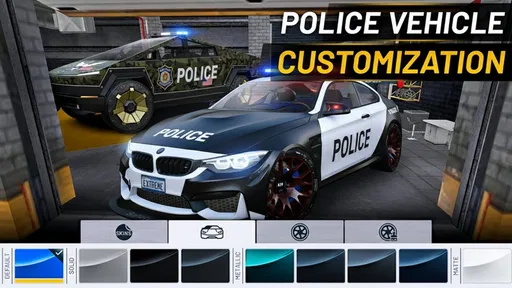
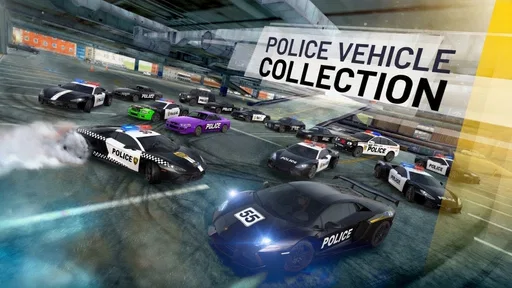
- Multiple police vehicles add variety to chases and missions.
- Short missions are convenient for quick gaming sessions.
- Action-focused gameplay keeps pursuits lively and engaging.
- Offline play is useful when you have no internet connection.
Cons
- Repeated chase objectives may become monotonous over time.
- Vehicle handling can feel less precise during sharp turns.
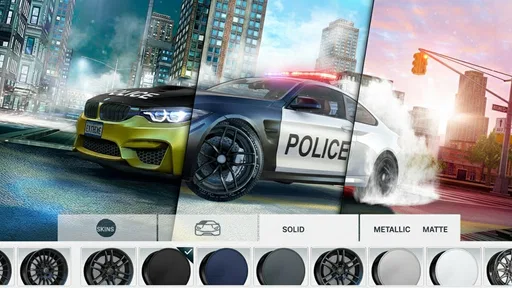
- Some upgrades or cars may require considerable in-game grinding.
- Advertising can interrupt the flow between missions.
- Graphics may look dated on newer phones and tablets.
FAQs for Police Car Chase: Police Games
What is Police Car Chase: Police Games about?
Police Car Chase: Police Games is an action-driving game focused on police pursuits, fast patrol cars, and chase-based missions. Players usually take control of a police vehicle, follow suspects, avoid obstacles, and complete objectives across different environments. The gameplay combines driving, pursuit strategy, and arcade-style action rather than realistic law-enforcement simulation.
Can I play Police Car Chase: Police Games offline?
The game may offer offline access to its main driving and chase missions, which is useful when you do not have a reliable internet connection. However, some features can still require connectivity, including advertisements, optional rewards, updates, cloud-related services, or promotional content. It is best to start the game online once after installation and check which modes remain available offline.
Is Police Car Chase: Police Games free to download and play?
Police Car Chase: Police Games is generally available as a free download, allowing users to try its core police-driving gameplay without paying upfront. Like many free mobile games, it may include advertisements, optional in-app purchases, or paid items that can speed up progress or unlock additional content. Check the store listing for current pricing and purchase details.
Is the game suitable for children?
The game is centered on police chases, vehicle collisions, pursuit missions, and arcade action. It normally avoids the complexity of mature crime simulations, but the fast-paced crashes and chase scenarios may not appeal to very young children. Parents should review the age rating, advertising settings, and possible in-app purchases before allowing a child to play.
What devices are compatible with Police Car Chase: Police Games?
Compatibility depends on the specific Android or iOS version available in your region and the requirements listed on the official app store page. The game should run on many relatively modern smartphones and tablets, but older devices may experience slower performance, longer loading times, or limited graphics settings. Confirm the required operating-system version and available storage before downloading.


